24 Bold Square Icons for Modern Branding
The Power of Geometric Precision in Design
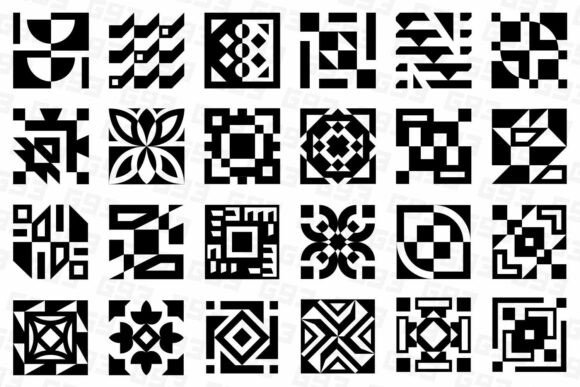
In a world saturated with complex imagery, there is a distinct power in simplicity. The Decorative Square Design Elements collection offers exactly that—a curated set of 24 black and white geometric square icons that bridge the gap between abstract art and functional design. These aren't just random shapes; they are carefully crafted visual assets featuring tribal, minimalist, and abstract patterns. For the modern designer, entrepreneur, or content creator, having a toolkit of high-quality graphic elements that are versatile enough to adapt to various mediums is essential. This collection provides that flexibility, allowing you to inject personality and structure into your projects without the clutter of overly detailed illustrations.
What makes this specific set stand out is the balance between decorative flair and geometric stability. Whether you are looking for a striking centerpiece for a logo design or subtle textures for packaging design, these square icons deliver. The black and white palette ensures maximum versatility, allowing you to easily apply brand colors or maintain a stark, high-contrast aesthetic. By utilizing these elements, you are not just adding decoration; you are implementing a design language that speaks to modernity, order, and intentionality.
Practical Applications: From Digital to Print
Understanding where to deploy these decorative square design elements is key to maximizing their value. In the realm of web design, these icons function beautifully as background textures, hover effects, or distinct section dividers. Because the collection includes PNG files with transparent backgrounds, integrating them into existing website layouts is seamless. You can layer them over photography or solid color blocks to create depth. For social media graphics, these squares are perfect for creating cohesive Instagram grids or Pinterest boards. The tribal and ethnic patterns can add a unique, earthy tone to travel or lifestyle blogs, while the minimalist patterns fit perfectly with tech or corporate aesthetics.
Beyond the screen, the utility of these elements extends heavily into editorial design and physical products. If you are a publisher working on a magazine layout, these icons can serve as spot illustrations or chapter markers, adding a sophisticated touch without distracting from the body text. For entrepreneurs involved in ethnic branding or artisanal products, these vectors are ideal for packaging design. Imagine a sleek, matte black box for a high-end product featuring a subtle, embossed geometric square—it immediately elevates the perceived value. The availability of EPS and AI vector files means you can scale these patterns to fit anything from a business card to a billboard without losing resolution, ensuring your brand identity remains sharp and professional across all touchpoints.
Technical Specifications and File Versatility
A major hurdle in design work is often technical compatibility. This collection removes that friction by providing a comprehensive suite of file formats. You receive 24 JPG files at 300 ppi, which are ready for immediate use in presentations or documents. However, the real power lies in the vector formats: SVG, AI, and EPS 10. For those using Adobe Illustrator or similar vector software, these files allow for total customization. You can change stroke weights, combine different geometric square icons to create complex patterns, or alter the colors to match specific design assets requirements.
The "High Resolution" and "300 ppi density" specifications are critical for print professionals. When working on commercial fonts and assets, pixelation is the enemy of professionalism. Knowing that these JPGs and PNGs are print-ready saves hours of troubleshooting. The inclusion of SVG (Scalable Vector Graphics) is particularly relevant for modern web design, as SVGs load faster and look crisper on high-definition screens compared to raster images. This collection is clearly built for the professional workflow, acknowledging that designers need assets that move fluidly between software environments.
Strategic Use in Brand Identity and Marketing
When building a brand identity, consistency is the currency of trust. Using a cohesive set of decorative square design elements helps unify disparate marketing materials. For instance, a startup might use one of the tribal patterns as a background texture on their website, the same pattern as a watermark on their letterhead, and a simplified version as a social media avatar. This repetition builds recognition. These elements work exceptionally well as "brand marks" or secondary logos that support the main wordmark, especially in modern typography compositions where a strong visual anchor is needed.
Consider the psychological impact of the patterns. The minimalist squares suggest efficiency, clarity, and modernity—traits valued in the tech and consulting sectors. Conversely, the abstract and tribal patterns evoke creativity, history, and craftsmanship, making them suitable for creative font pairings in the arts, wellness, or boutique retail sectors. By selecting the specific icon that resonates with your brand's voice, you can influence how your audience perceives your business. It is a subtle form of communication, but in marketing, the subtle details often make the biggest difference.
Integrating with Typography and Layout
These icons are designed to play well with type. When placing text over or near these squares, the high-contrast black and white nature of the designs ensures readability. If you are working with a heavy serif font or a flowing script font, a structured geometric square can provide a necessary visual counterweight, preventing the layout from feeling too chaotic. For example, pairing a bold, abstract square icon with a clean sans serif font creates a dynamic tension that feels contemporary and energetic.
When evaluating font pairing and layout, use these squares to create negative space or visual breaks. In a dense block of text, a small, well-placed icon can give the reader's eye a resting point. Because they are vector-based, you have the freedom to experiment with opacity. A light gray, low-opacity version of a pattern can sit behind a headline in an editorial design layout, adding texture without competing for attention. This level of nuance is what separates amateur layouts from professional graphic elements usage. Ultimately, this collection provides the building blocks for a sophisticated, cohesive, and visually engaging design system.